



Let’s face it, folks—we’ve all been there. That uncomfortable, bloated feeling when your internal mail system decides to go on strike. Constipation: the party pooper of digestive issues! But before you reach for those pharmaceutical big guns, let’s talk about a dynamic duo from Mother Nature’s medicine cabinet that might just get things moving again: senna tea and inulin fiber – a natural constipation relief solution. It’s like Batman and Robin for your bowels!
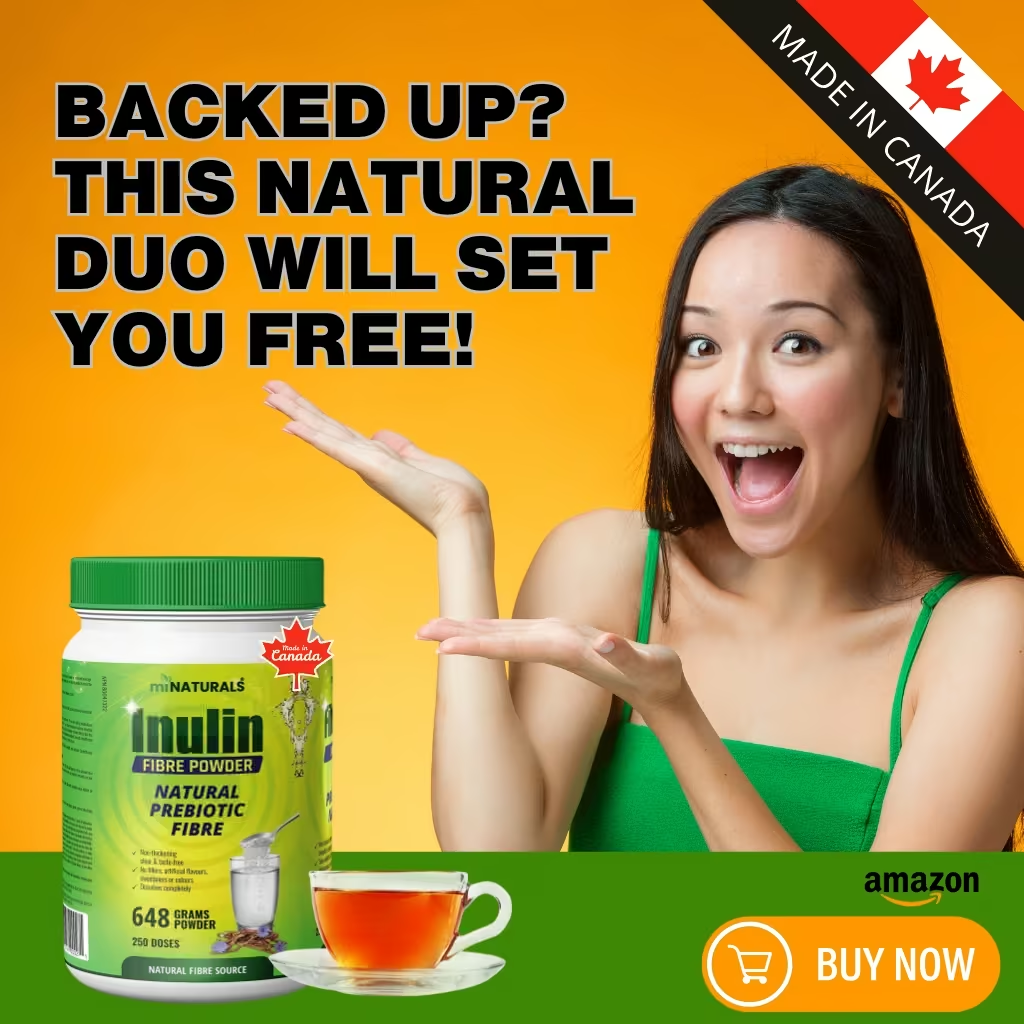
The Dream Team: Meet Your Intestinal Avengers
Senna Tea: The Pushy Friend Who Gets Things Done
Senna is basically that friend who shows up at your door at 7 AM on a Saturday, yanks open your curtains, and declares “WE’RE GOING HIKING!” Your colon might not appreciate the wake-up call, but it’ll thank you later.
This leafy wonder from the Cassia plant family has been making things “happen” since the 9th century. Arabian physicians were the original poop influencers, documenting senna’s ability to transform constipated frowns upside down[1]. Today, it’s so legit that even the FDA gave it the thumbs-up as a nonprescription laxative. That’s right—government-approved natural constipation relief pooping power!
Senna works through compounds called sennosides that basically throw a dance party in your intestines, stimulating those wave-like contractions that send waste packing[2]. Within 6-12 hours, you’ll be making that triumphant walk back from the bathroom with a lighter step and a knowing smile.
Inulin Fiber: The Smooth Operator
If senna is the loud, pushy friend, inulin is the sophisticated one who knows how to make everything run smoothly. Found in chicory, garlic, onions, and other plants that make your breath questionable but your digestion fabulous, inulin is the James Bond of dietary fibers.
Unlike other carbs that get demolished in the digestive demolition derby, inulin sneaks past your small intestine’s security system completely intact, thanks to its fancy β-(2,1) linkages[3]. It’s basically wearing a digestive invisibility cloak until it reaches your large intestine, where it becomes an all-you-can-eat buffet for your good gut bacteria.
Your beneficial bacteria throw a feast when inulin arrives, multiplying like rabbits and creating a gut paradise that keeps things soft, bulky, and ready to roll. Research shows that inulin supplementation can significantly increase stool frequency and improve consistency[4]. It’s like hiring an interior decorator for your intestines!

When They Join Forces: The Bowel Movement Revolution
Put these two together and what do you get? A natural constipation relief solution that’s greater than the sum of its parts—like peanut butter meeting jelly or Netflix meeting your couch on a Friday night.
- The Push and Plush Effect: Senna provides the motivational speaking (“LET’S DO THIS!”) while inulin creates the perfect environment for a smooth exit strategy.
- Bacterial Buddies: Inulin feeds the very bacteria that activate senna’s compounds[5]. It’s like giving the key to someone who already knows where the ignition is!
- The Comfort Committee: Inulin’s softening effects can help tame senna’s sometimes overzealous approach, reducing the “OH MY GOD IT’S HAPPENING RIGHT NOW” emergency situations.
- Long-Term Relationship Goals: While senna handles your immediate crisis, inulin is playing the long game, nurturing your gut microbiome like a probiotic matchmaker[6].
How to Host This Intestinal Party
Ready to invite these two to your internal gathering? Here’s your party planning guide:
- Senna Tea Serving Suggestion: Steep 1-2 teaspoons of dried leaves or one tea bag for 10 minutes. Best enjoyed before bedtime—unless you want to be fashionably early to work with an unexpected bathroom break![7]
- Inulin Introduction: Start small with 2-3 grams (about half a teaspoon) and work your way up to 5-10 grams. Your bacteria need time to prepare for this feast, or they’ll celebrate with gas—and nobody wants that party favor[8].
- The Mixer: Combine both, starting with modest amounts. Remember, this isn’t a competition to see how quickly you can empty yourself—it’s about smooth, civilized relief.
Warning Labels (Because We Care About Your Dignity)
Even natural remedies come with fine print smaller than your ex’s heart:
Senna Shenanigans to Watch For:
- Don’t make it a long-term relationship (no more than 1-2 weeks)—it gets clingy and your colon might forget how to function independently[9]
- Can cause the intestinal equivalent of a temper tantrum: cramping, diarrhea, and the “I need a bathroom NOW” dance
- Not recommended if you have intestinal blockages or inflammatory bowel disease—that’s like bringing a flamethrower to a gas leak[10]
Inulin Incidents:
- May cause your stomach to become a one-person jazz band of gurgles and toots when you first start
- The “start low, go slow” approach isn’t just good dating advice—it applies here too
- If you have IBS, your gut might be more dramatic about inulin than a teenager who can’t go to a concert[11]

When to Call in the Professionals
While this dynamic duo can work wonders, sometimes you need to bring in the big guns (doctors, not stronger laxatives!). Seek medical advice if:
- Your constipation is more committed to staying than your last bad relationship
- Pain becomes your constant companion
- You see red (literally—blood is never a good bathroom surprise)
- You find yourself unable to poop without your herbal helpers
The Bottom Line (Pun Absolutely Intended)
The senna tea and inulin fiber combo might just be the natural constipation relief solution you’ve been hoping would come along. It’s like finding the perfect pair of jeans—supportive in all the right places and helps everything look better in the end!
Remember, a happy colon means a happier you. So raise a cup of senna tea, sprinkle in some inulin, and toast to regular movements and bathroom visits that don’t require bringing a good book!
Disclaimer
This article is meant to entertain and inform, not replace medical advice. The combination of senna tea and inulin can be potent and may cause strong laxative effects in some individuals. Start with low doses of each and monitor your body’s response. Senna should not be used for more than 1-2 weeks without medical supervision as it can lead to dependence and electrolyte imbalances. Those with existing gastrointestinal conditions should consult a healthcare provider before trying this combination. Pregnant women, nursing mothers, and individuals taking medications should also seek medical advice before use.
References
- Guarize, L., da Costa, J. C., Dutra, L. B., Mendes, R. F., Lima, I. V. A., & Scio, E. (2012). Anti-inflammatory, laxative and intestinal motility effects of Senna macranthera leaves. Natural Product Research, 26(4), 331-343.
- Franz, G. (1993). The senna drug and its chemistry. Pharmacology, 47(Suppl. 1), 2-6.
- Roberfroid, M. B. (2005). Introducing inulin-type fructans. British Journal of Nutrition, 93(S1), S13-S25.
- Micka, A., Siepelmeyer, A., Holz, A., Theis, S., & Schön, C. (2017). Effect of consumption of chicory inulin on bowel function in healthy subjects with constipation: a randomized, double-blind, placebo-controlled trial. International Journal of Food Sciences and Nutrition, 68(1), 82-89.
- Vandeputte, D., Falony, G., Vieira-Silva, S., Wang, J., Sailer, M., Theis, S., Verbeke, K., & Raes, J. (2017). Prebiotic inulin-type fructans induce specific changes in the human gut microbiota. Gut, 66(11), 1968-1974.
- Sheng, W., Ji, G., & Zhang, L. (2023). Immunomodulatory effects of inulin and its intestinal metabolites. Frontiers in Immunology, 14, 1224092.
- Borrelli, F., & Izzo, A. A. (2000). The plant kingdom as a source of anti‐ulcer remedies. Phytotherapy Research, 14(8), 581-591.
- Bonnema, A. L., Kolberg, L. W., Thomas, W., & Slavin, J. L. (2010). Gastrointestinal tolerance of chicory inulin products. Journal of the American Dietetic Association, 110(6), 865-868.
- Wald, A. (2016). Constipation: Advances in diagnosis and treatment. JAMA, 315(2), 185-191.
- Liu, X., Yang, Q., He, Z., & Yao, S. (2021). Efficacy and safety of inulin supplementation for functional constipation: a systematic review protocol. BMJ Open, 11(4), e042597.
- Wilson, B., & Whelan, K. (2017). Prebiotic inulin-type fructans and galacto-oligosaccharides: definition, specificity, function, and application in gastrointestinal disorders. Journal of Gastroenterology and Hepatology, 32(S1), 64-68.
