


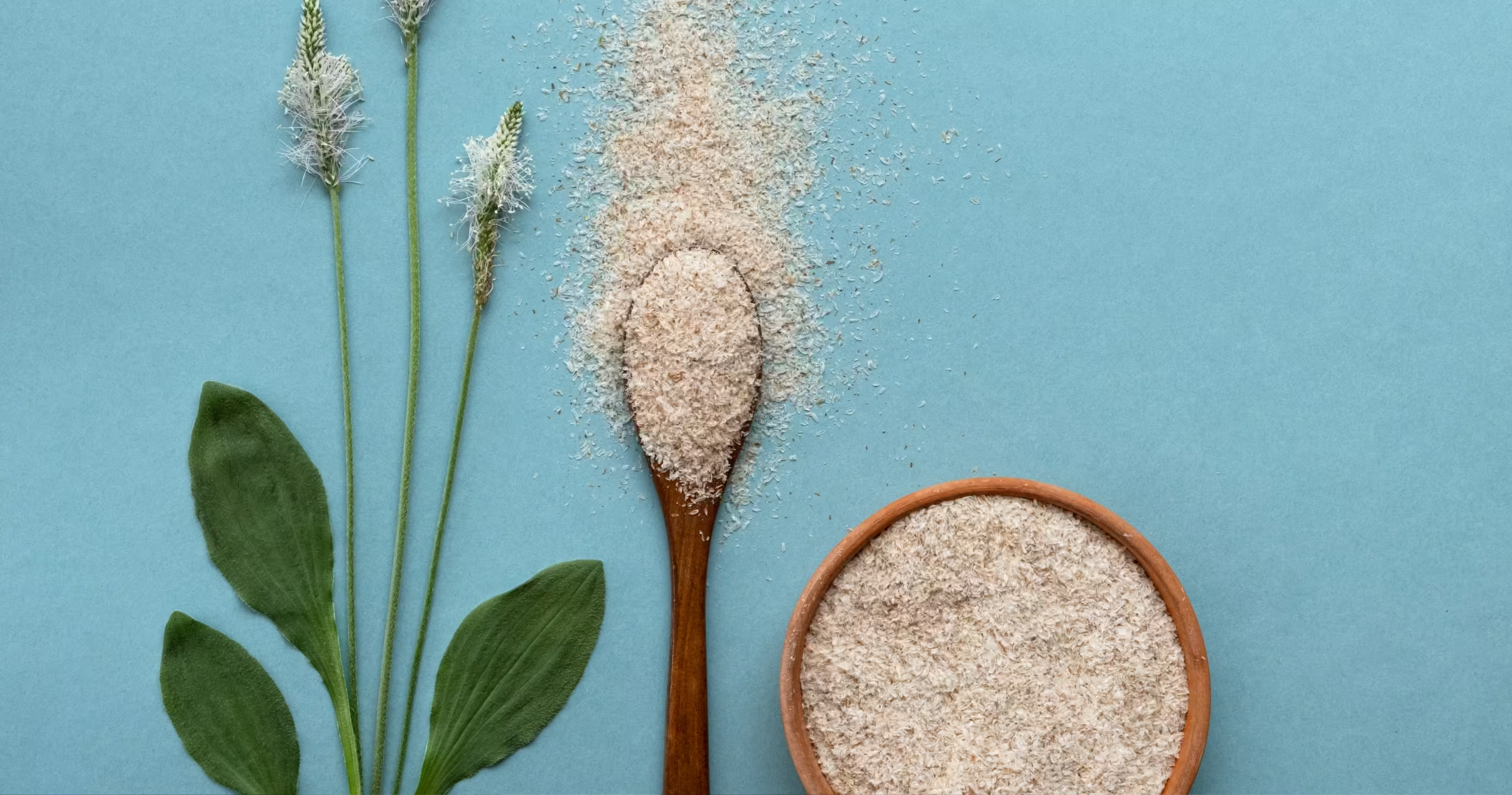
Are you feeling backed up? Sitting on the throne with nothing to show for it? Let’s get to the bottom of constipation and how psyllium husk might just be your rear’s new best friend.
When Your Exit Strategy Fails
Constipation happens to the best of us. It’s that uncomfortable feeling when your internal mail system decides to hold packages hostage. About 16% of adults experience chronic constipation, and many more face occasional traffic jams in the southern tunnel [1].
The symptoms are hard to miss: infrequent bowel movements, straining harder than a weightlifter at the Olympics, and feeling like you’ve got a brick in your belly. According to the Rome IV criteria, constipation is officially diagnosed when you have two or more symptoms like straining, lumpy stools, or incomplete evacuation at least 25% of the time [2]. Not exactly dinner conversation material, but definitely worth discussing.

Enter Psyllium: The Smooth Operator
Psyllium husk powder is like the diplomatic negotiator for your digestive standoffs. This plant-based fiber comes from the husks of Plantago ovata seeds and works wonders for constipation relief [3].
What makes psyllium special is its superpower as a soluble fiber. When it meets water, it transforms into a gel-like substance that slides through your intestines like a well-oiled bobsled team. This magical metamorphosis helps soften stool and makes your bathroom visits less like wrestling matches. A meta-analysis of 7 studies found that psyllium increased stool frequency in patients with chronic constipation by 71% compared to placebo [4].
The Science Behind the Scenes
Psyllium is classified as a bulk-forming laxative, but don’t let the word “laxative” scare you. Unlike its more aggressive cousins (stimulant laxatives), psyllium doesn’t force your intestines into emergency evacuation mode [5].
Instead, it:
- Absorbs water and expands in your gut
- Adds bulk to stool
- Stimulates natural intestinal contractions
- Helps train your body for regular movements
Think of it as physical therapy for your colon rather than a drill sergeant. Research published in the American Journal of Gastroenterology shows that psyllium can increase stool water content by up to 59%, making passage much easier [6].
Dosage: Finding Your Flow
Starting with psyllium is like dipping your toe in the water—begin small and work your way up:
- Start with 1 teaspoon (about 5g) mixed in water once daily
- Gradually increase to 1-2 tablespoons (15-30g) per day, divided into doses
- Always chase it with at least 8oz of water (seriously, don’t skip this step) [7]
Know Your Gut Profile
Not all rear ends respond the same way to psyllium. Your “gut profile” matters:
- Sensitive Stomachs: If you have IBS or a touchy digestive system, start with tiny amounts and increase slowly. Some studies suggest that psyllium can actually help IBS symptoms in about 77% of patients [8].
- Medication Takers: Take psyllium at least 2 hours before or after other medications, as it might affect absorption [9].
- Dehydration Prone: If you’re not a water fan, reconsider. Psyllium without adequate fluid is like trying to push a cotton ball through a straw.
- Gut Blockage History: If you’ve had intestinal blockages before, chat with your doctor first. Safety first, people! [10]
The Laxative Lineup: How Psyllium Compares
In the world of constipation relief, there’s quite the cast of characters:
| Laxative Type | How It Works | Gentleness Rating |
|---|---|---|
| Psyllium (Bulk-forming) | Absorbs water, adds bulk | 🌟🌟🌟🌟🌟 |
| Stimulants (Bisacodyl) | Irritates intestinal lining | 🌟🌟 |
| Osmotic (Milk of Magnesia) | Draws water into intestines | 🌟🌟🌟 |
| Stool Softeners | Adds moisture to stool | 🌟🌟🌟🌟 |
Psyllium wins the gentleness contest because it works with your body’s natural processes rather than forcing things along. A comparative study found that psyllium had fewer side effects than stimulant laxatives while maintaining similar efficacy for constipation relief [11].
Beyond the Bathroom: Psyllium’s Bonus Benefits
While you’re solving your constipation conundrum, psyllium delivers some impressive side benefits:
- Lowers cholesterol by up to 7% [12]
- Helps regulate blood sugar levels [13]
- May reduce blood pressure slightly [14]
- Feeds beneficial gut bacteria [15]

The Fine Print: Potential Pitfalls
No remedy is perfect, and psyllium has a few quirks:
- Gas and bloating can occur initially (your microbiome is adjusting)
- Can cause choking if not taken with enough water
- May reduce mineral absorption slightly if overused [16]
Making Psyllium Part of Your Routine
For lasting constipation relief, consider these psyllium pro-tips:
- Mix it with smoothies to mask the texture
- Take it at the same time daily to establish a routine
- Pair with probiotic foods for a gut health power couple
- Stay consistent—your colon appreciates regularity [17]
References
- Suares NC, Ford AC. Prevalence of, and risk factors for, chronic idiopathic constipation in the community: systematic review and meta-analysis. Am J Gastroenterol. 2011;106(9):1582-1591.
- Lacy BE, Mearin F, Chang L, et al. Bowel disorders. Gastroenterology. 2016;150(6):1393-1407.
- Lambeau KV, McRorie JW. Fiber supplements and clinically proven health benefits: How to recognize and recommend an effective fiber therapy. J Am Assoc Nurse Pract. 2017;29(4):216-223.
- McRorie JW, Daggy BP, Morel JG, et al. Psyllium is superior to docusate sodium for treatment of chronic constipation. Aliment Pharmacol Ther. 1998;12(5):491-497.
- Leung L, Riutta T, Kotecha J, Rosser W. Chronic constipation: an evidence-based review. J Am Board Fam Med. 2011;24(4):436-451.
- McRorie JW. Evidence-based approach to fiber supplements and clinically meaningful health benefits. Nutr Today. 2015;50(2):82-89.
- FDA. Laxative drug products for over-the-counter human use. Federal Register. 1985;50:2124-2158.
- Moayyedi P, Quigley EM, Lacy BE, et al. The effect of fiber supplementation on irritable bowel syndrome: a systematic review and meta-analysis. Am J Gastroenterol. 2014;109(9):1367-1374.
- Richter JE, Nagar S. Refining the approach to medications that may interact with psyllium. Am J Gastroenterol. 2019;114(5):824-826.
- Eswaran S, Muir J, Chey WD. Fiber and functional gastrointestinal disorders. Am J Gastroenterol. 2013;108(5):718-727.
- Attaluri A, Donahoe R, Valestin J, et al. Randomised clinical trial: dried plums (prunes) vs. psyllium for constipation. Aliment Pharmacol Ther. 2011;33(7):822-828.
- Anderson JW, Allgood LD, Lawrence A, et al. Cholesterol-lowering effects of psyllium intake adjunctive to diet therapy in men and women with hypercholesterolemia: meta-analysis of 8 controlled trials. Am J Clin Nutr. 2000;71(2):472-479.
- Gibb RD, McRorie JW, Russell DA, et al. Psyllium fiber improves glycemic control proportional to loss of glycemic control: a meta-analysis of data in euglycemic subjects, patients at risk of type 2 diabetes mellitus, and patients being treated for type 2 diabetes mellitus. Am J Clin Nutr. 2015;102(6):1604-1614.
- Khan K, Jovanovski E, Ho HVT, et al. The effect of viscous soluble fiber on blood pressure: A systematic review and meta-analysis of randomized controlled trials. Nutr Metab Cardiovasc Dis. 2018;28(1):3-13.
- Carlson JL, Erickson JM, Lloyd BB, Slavin JL. Health effects and sources of prebiotic dietary fiber. Curr Dev Nutr. 2018;2(3):nzy005.
- Bosscher D, Breynaert A, Pieters L, Hermans N. Food-based strategies to modulate the composition of the intestinal microbiota and their associated health effects. J Physiol Pharmacol. 2009;60(Suppl 6):5-11.
- Yang J, Wang HP, Zhou L, Xu CF. Effect of dietary fiber on constipation: a meta analysis. World J Gastroenterol. 2012;18(48):7378-7383.


