



Oh my goodness, folks! Hold onto your wallets because there’s a new weight loss trend that’s got people clutching their pearls (and their psyllium husks) – the so-called “poor man’s Ozempic”!
That’s right, while the rich and famous are dropping $900 a month on fancy-schmancy Ozempic[1], the rest of us common folk are apparently raiding the fiber supplement aisle on amazon.ca for psyllium husk at a fraction of the cost. Talk about a bargain basement glow-up! 💅
The Scoop on the Poop (Literally)
TikTokers like @masteringdiabetes claim this bulky fiber triggers stretch receptors in your intestines, sending “I’M STUFFED!” signals to your brain similar to how Ozempic works[1]. But experts are rolling their eyes faster than psyllium rolls through your digestive tract.
Dr. Robert Alesiani, Chief Pharmacotherapy Officer at Tabula Rasa HealthCare, explains that while both might curb your appetite, they’re about as similar as a tricycle and a Tesla[1]. Psyllium just swells up in your tummy “into a soluble gelatinous mass,” like a temporary food baby, while Ozempic actually sweet-talks your brain’s appetite centers[1].


The Weighty Truth (With a Side of Relief)
Let’s get real: Ozempic can help you shed 15-20% of your body weight over about six months (that’s 20-27 pounds for the math-challenged)[1]. Psyllium? Dr. Steven Batash of Batash Endoscopic Weight Loss basically said “don’t hold your breath” for weight loss – noting he “had not had much success when using fiber supplements for either weight loss or stabilizing blood sugar”[1].
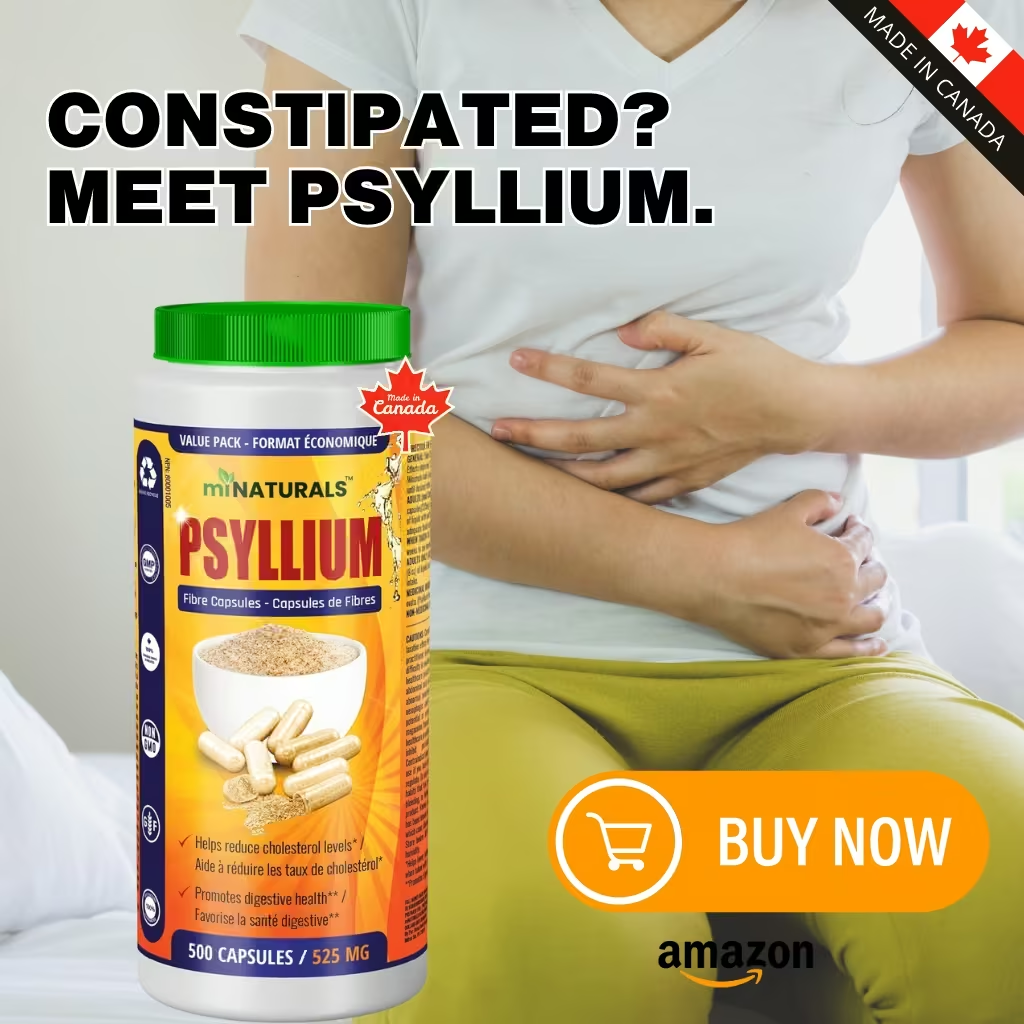
But the true superpower of psyllium isn’t weight loss but its ability to keep things moving smoothly down below. As a bulk-forming laxative[1], it’s the superhero of constipation relief that Ozempic could never be! Your colon will be sending you thank-you notes while your scale remains stubbornly unchanged.
The Downside of the Fiber-side
Before you start chugging psyllium like it’s the elixir of skinny life, consider the potential side effects identified by Dr. Alesiani[1]:
- Nausea (because who doesn’t want that?)
- Paradoxical constipation if you don’t drink enough water (ironic!)
- Diarrhea (from zero to hero in your bathroom!)
- Flatulence (making you popular at parties)
- Cramping and gas pain (sexy!)
Plus, it can mess with your meds faster than your ex messed with your feelings. Antidepressants, some anti-coagulants, thyroid supplements, anticonvulsants, digoxin, metformin, and some antibiotics might not work properly if taken with psyllium[1].
The Bottom Line (Pun Absolutely Intended)
While psyllium might not transform your waistline like Ozempic, it will transform your bathroom experience! Your intestines will be as clean as a whistle and as regular as a Swiss train schedule.
So maybe it’s not “poor man’s Ozempic” after all – it’s “smart person’s constipation solution” with a side of mild appetite suppression. Your wallet AND your colon will thank you! 🚽✨
References
[1] Schimelpfening, N. (2023, October 4). People Are Using Psyllium Husk Fiber as an Ozempic Alternative: Does It Work? Healthline. https://www.healthline.com/health-news/people-are-using-psyllium-husk-fiber-as-an-ozempic-alternative-does-it-work


